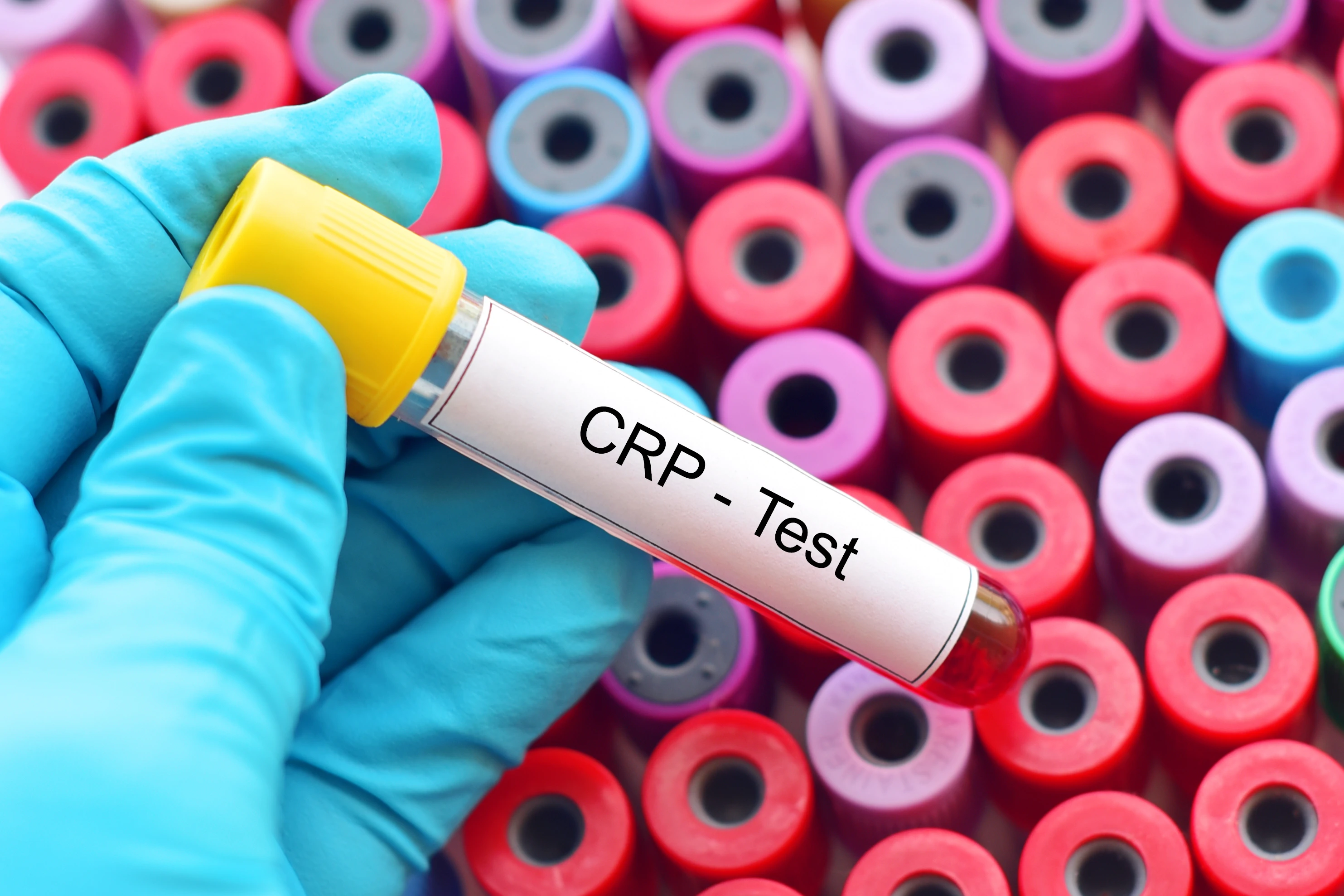
You look at your blood test results and notice that your CRP is elevated.
It is easy to jump to conclusions. Does it mean you have an infection? An autoimmune disease? Something serious?
Not necessarily.
C-reactive protein (CRP) is one of the most commonly used laboratory markers of inflammation. An elevated level can indicate to a healthcare professional that an inflammatory process may be taking place somewhere in the body, but CRP cannot show where the inflammation is located or what is causing it.4
That is why CRP should never be interpreted in isolation.
What Is CRP?
C-reactive protein is an acute-phase protein produced mainly by the liver. Its production increases during the inflammatory response, largely under the influence of signaling molecules such as interleukin-6 (IL-6).1
CRP is not simply a passive laboratory marker. It can bind to certain components of microorganisms or damaged cells and interact with the complement system, contributing to mechanisms involved in innate immune defense and phagocytosis.3
From a clinical perspective, however, one of its most useful characteristics is that its concentration can change relatively quickly as inflammation changes.
Studies of CRP metabolism in humans have shown that its plasma half-life is approximately 19 hours. Its clearance remains relatively constant, meaning that major changes in blood CRP levels mainly reflect changes in the rate at which the body is producing it.2
This helps explain why CRP can be useful for monitoring an inflammatory process over time.
If the trigger causing inflammation persists, CRP may remain elevated. If the underlying inflammation resolves, CRP levels usually fall as well.2 4
What Does an Elevated CRP Actually Tell Us?
An elevated CRP provides an important but limited piece of information: there may be inflammation somewhere in the body.
It does not tell us:
- exactly where the inflammation is occurring
- what is causing it
- whether the cause is bacterial, viral, autoimmune, or something else
- how serious a condition is based on the CRP value alone.4
A CRP result therefore becomes clinically meaningful only when it is interpreted together with a person’s symptoms, medical history, physical examination and, when appropriate, other laboratory or imaging tests.4
When Can CRP Be Elevated?
CRP can rise in many different situations.
Acute Infections
Both bacterial and viral infections can trigger an inflammatory response and increase CRP levels.4
However, an elevated CRP alone cannot identify which microorganism is responsible. A high CRP level should not automatically be interpreted as proof of a bacterial infection or as an indication that antibiotic treatment is needed.
Autoimmune and Chronic Inflammatory Diseases
CRP may also be elevated in chronic inflammatory conditions such as:
- rheumatoid arthritis
- inflammatory bowel diseases, including Crohn’s disease
- certain types of vasculitis
- other autoimmune or inflammatory disorders.4
In these situations, CRP may sometimes be used together with other clinical information to monitor disease activity or response to treatment.
Injury and Tissue Damage
Inflammation is also part of the body’s normal response to tissue injury.
CRP may therefore rise after surgery, trauma, or other forms of tissue damage.4
Chronic Low-Grade Inflammation
Not every increase in CRP is caused by an acute illness.
Higher CRP concentrations are more commonly observed in people with obesity and may also be associated with smoking and other chronic health factors.4 5 8 10
These increases are usually much smaller than those seen during a strong acute inflammatory response.
CRP and hs-CRP Are Not Exactly the Same Test
You may also have seen the term hs-CRP, meaning high-sensitivity C-reactive protein, on a laboratory report.
Both tests measure the same protein, but the methods are designed for different clinical purposes.
A standard CRP test is generally used when clinicians are assessing or monitoring an inflammatory condition. The hs-CRP test can detect much lower CRP concentrations and is used in selected situations as an aid in assessing cardiovascular risk.4
Should You Try to “Lower” Your CRP?
This is where a common misunderstanding arises.
CRP is usually a marker of what is happening in the body rather than the disease itself.
The goal, therefore, is generally not to focus solely on lowering the CRP number.
The goal is to understand why it is elevated.
If CRP is elevated because of an infection, treating the infection may cause it to fall. If it is elevated because of an inflammatory disease, controlling the disease may lower CRP. If it increased after an injury or surgery, it may decline as healing progresses.4
For people with persistent low-grade inflammation related to metabolic health, certain lifestyle changes have been associated with lower CRP levels, although the scientific evidence requires careful interpretation.
Weight Loss, When Medically Appropriate
Obesity is associated with higher CRP concentrations.
Randomized lifestyle intervention trials have shown that weight-loss interventions can reduce CRP in people with obesity or excess body weight.5 10
For example, an 18-month randomized trial in older adults with overweight or obesity found that weight loss through dietary intervention reduced CRP and other markers of inflammation.5
A large lifestyle intervention in people with obesity and type 2 diabetes also produced significant reductions in high-sensitivity CRP over one year.10
This does not mean that every person with an elevated CRP needs to lose weight. It means that when excess adipose tissue forms part of the overall clinical picture, improving metabolic health may also help reduce low-grade systemic inflammation.
What About Exercise?
Exercise is extremely important for overall health.
In the randomized INFLAME trial, four months of aerobic exercise without meaningful weight loss did not significantly reduce CRP in sedentary individuals who already had elevated CRP levels at baseline.6
Other lifestyle intervention studies suggest that reductions in body fat and broader improvements in metabolic health may partly explain why CRP sometimes decreases during exercise programs.5 6
Exercise therefore remains highly beneficial for health, even if CRP itself does not always decrease.
Mediterranean-Style Dietary Patterns
Overall dietary patterns may also play a role.
In a randomized trial, Mediterranean-style diets supplemented with either extra-virgin olive oil or nuts improved several cardiovascular risk factors, while CRP decreased in the group consuming olive oil compared with a control group following a low-fat diet.7
This does not mean that there is a single “anti-inflammatory food” capable of lowering CRP.
It is more useful to think about the overall dietary pattern rather than trying to “treat” a laboratory value with individual foods or supplements.
Smoking Cessation
Smoking is associated with chronic inflammation and higher CRP levels in many populations.8
A prospective cohort study found that smoking cessation was associated with a favorable effect on CRP levels, although the change was not immediate.8
The health benefits of quitting smoking extend far beyond CRP. This laboratory marker should therefore not be the primary reason to stop smoking, although reduced inflammation may be one of the long-term benefits.
What About Sleep?
Controlled laboratory experiments have shown that prolonged sleep restriction can affect inflammatory signaling.
In one randomized study, healthy volunteers who restricted their sleep to four hours per night for several days experienced changes in inflammatory markers.9
However, this does not automatically prove that improving sleep is a direct treatment for elevated CRP.
Adequate and consistent sleep remains important for overall health.
Conclusion
CRP is a marker, not a diagnosis.
An elevated CRP may indicate that an inflammatory process is taking place, but it usually cannot tell us where that inflammation is located or what is causing it.
Infections, inflammatory diseases, tissue damage, and a range of chronic health factors can all influence CRP levels.
And if your CRP is elevated, the goal is usually not simply to make the number go down.
The goal is to identify and, when necessary, treat the underlying cause.
References
- Castell JV, Gómez-Lechón MJ, David M, Andus T, Geiger T, Trullenque R, et al. Interleukin-6 is the major regulator of acute phase protein synthesis in adult human hepatocytes. FEBS Lett. 1989;242(2):237–239. doi:10.1016/0014-5793(89)80476-4.
- Vigushin DM, Pepys MB, Hawkins PN. Metabolic and scintigraphic studies of radioiodinated human C-reactive protein in health and disease. J Clin Invest. 1993;91(4):1351–1357. doi:10.1172/JCI116336.
- Mold C, Du Clos TW, Nakayama S, Edwards KM, Gewurz H. C-reactive protein reactivity with complement and effects on phagocytosis. Ann N Y Acad Sci. 1982;389:251–262. doi:10.1111/j.1749-6632.1982.tb22141.x.
- U.S. National Library of Medicine. C-Reactive Protein (CRP) Test. MedlinePlus Medical Tests. Updated June 11, 2025.
- Nicklas BJ, Ambrosius W, Messier SP, Miller GD, Penninx BWJH, Loeser RF, et al. Diet-induced weight loss, exercise, and chronic inflammation in older, obese adults: a randomized controlled clinical trial. Am J Clin Nutr. 2004;79(4):544–551. doi:10.1093/ajcn/79.4.544.
- Church TS, Earnest CP, Thompson AM, Priest EL, Rodarte RQ, Saunders T, Ross R, Blair SN. Exercise without weight loss does not reduce C-reactive protein: the INFLAME study. Med Sci Sports Exerc. 2010;42(4):708–716. doi:10.1249/MSS.0b013e3181c03a43.
- Estruch R, Martínez-González MA, Corella D, Salas-Salvadó J, Ruiz-Gutiérrez V, Covas MI, et al. Effects of a Mediterranean-style diet on cardiovascular risk factors: a randomized trial. Ann Intern Med. 2006;145(1):1–11. doi:10.7326/0003-4819-145-1-200607040-00004.
- Gallus S, Lugo A, Suatoni P, Taverna F, Bertocchi E, Boffi R, et al. Effect of tobacco smoking cessation on C-reactive protein levels in a cohort of low-dose computed tomography screening participants. Sci Rep. 2018;8:12908. doi:10.1038/s41598-018-29867-9.
- Haack M, Sanchez E, Mullington JM. Elevated inflammatory markers in response to prolonged sleep restriction are associated with increased pain experience in healthy volunteers. Sleep. 2007;30(9):1145–1152. doi:10.1093/sleep/30.9.1145.
- Belalcazar LM, Reboussin DM, Haffner SM, Hoogeveen RC, Kriska AM, et al.; Look AHEAD Research Group. A 1-year lifestyle intervention for weight loss in individuals with type 2 diabetes reduces high C-reactive protein levels and identifies metabolic predictors of change. Diabetes Care. 2010;33(11):2297–2303. doi:10.2337/dc10-0728.
Comments
💬 Join the discussion