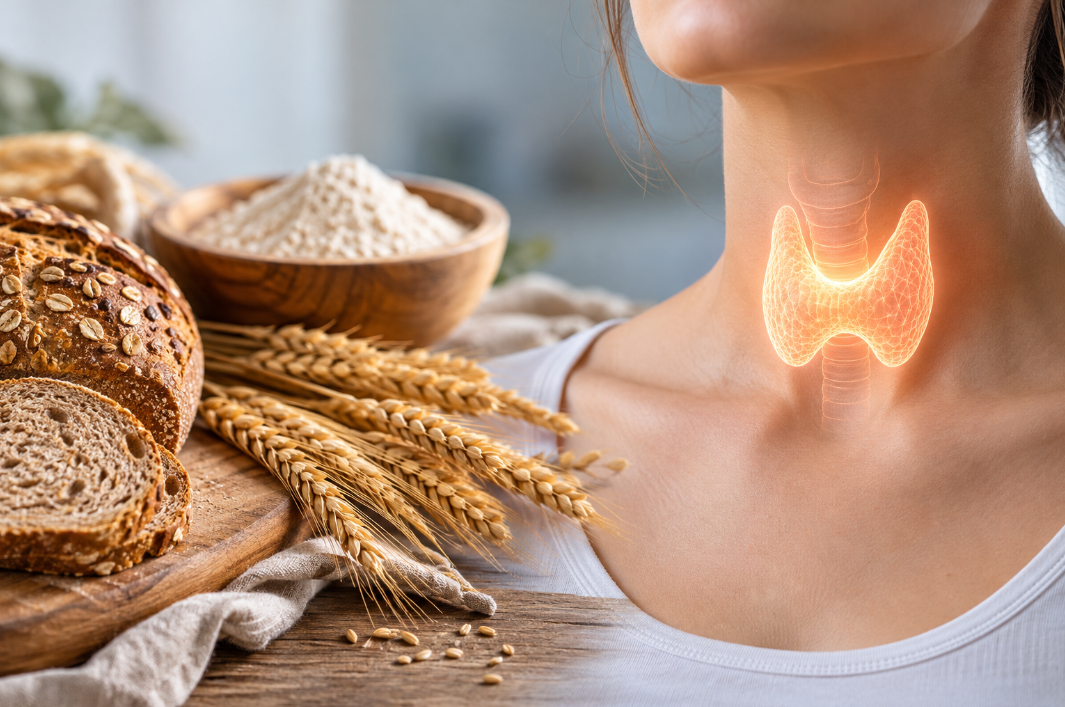
In the world of social media, gluten has become a word that inspires fear, even though this fear is not supported by scientific evidence. According to claims made primarily by influencers, a gluten-free diet can reduce inflammation, lower thyroid antibody levels, and ultimately cure the autoimmune disease.
But is this really possible?
What Are Autoimmune Diseases?
Autoimmune diseases are considered multifactorial conditions. They occur when the immune system mistakenly attacks the body’s own healthy cells and tissues.
This happens when the mechanisms of immune tolerance become disrupted. Under normal circumstances, these mechanisms prevent immune responses against the body’s own cells and tissues.
As a result, chronic inflammation and damage to specific organs may occur, such as the thyroid gland in Hashimoto’s thyroiditis. Alternatively, multiple organ systems may be affected, as in systemic lupus erythematosus.
The development of autoimmune diseases is associated with complex interactions between genetic, immunological, and environmental factors. [1]
What Is Hashimoto’s Thyroiditis?
Hashimoto’s thyroiditis, also known as chronic autoimmune thyroiditis or chronic lymphocytic thyroiditis, occurs when the immune system loses immune tolerance to components of the thyroid gland and develops an autoimmune response against thyroid tissue. [2, 3, 4]
It is one of the most common autoimmune diseases affecting the thyroid gland and a major cause of primary hypothyroidism in regions where iodine intake is sufficient. [2, 3, 5]
Hashimoto’s thyroiditis can affect anyone, but it is significantly more common in women.
A large systematic review and meta-analysis estimated its overall prevalence among adults at approximately 7.5%, although estimates varied considerably depending on geographical region, population, and diagnostic methods. Women were affected almost four times more frequently than men. [6]
What Is Gluten?
Gluten is a complex mixture of proteins found in cereals such as wheat, barley, and rye.
Gluten may also be found in beverages, medications, or dietary supplements containing wheat, barley, or rye. [8]
Additionally, it is frequently used in the food industry, for example, in processed meats or as a food additive. [7]
The most common nutrient deficiencies among patients following a gluten-free diet involve B vitamins, vitamin D, calcium, and iron. Inadequate intake of magnesium, zinc, selenium, and copper is also frequently observed. [8]
Since the production of gluten-free foods is a complex process, gluten-free products are often highly processed and contain more fats and carbohydrates than their traditional counterparts.
What Does Scientific Research Show?
The effects of a gluten-free diet on Hashimoto’s thyroiditis have been investigated in small clinical studies, as well as systematic reviews and meta-analyses.
However, the findings are inconsistent.
Study 1
In 2019, a pilot clinical study conducted by Krysiak and colleagues was published in Experimental and Clinical Endocrinology & Diabetes.
The researchers examined 34 women with Hashimoto’s thyroiditis who were not receiving thyroid medication.
It is important to note that all participants tested positive for antibodies against tissue transglutaminase, a marker used in the diagnostic investigation of celiac disease.
The participants were divided into two groups.
The first group included 16 women who followed a gluten-free diet for six months, while the second group consisted of 18 women who continued their usual diet.
The researchers measured both anti-TPO and anti-Tg antibodies, as well as thyroid hormones and other laboratory parameters.
In the group that avoided gluten, a reduction in thyroid antibody levels was observed, along with certain changes in markers of thyroid function. [9]
These findings attracted attention because they suggested that the dietary intervention might influence certain immunological parameters.
The Study Has Significant Limitations
- It included a small number of participants and was not randomized.
- All women tested positive for antibodies against tissue transglutaminase. This means that some participants may have had undiagnosed celiac disease, as no histological examination of the small intestine was performed.
- A reduction in antibody levels does not, by itself, demonstrate an improvement in the long-term course of the disease.
Therefore, this study does not provide sufficient evidence to recommend gluten avoidance for all patients with Hashimoto’s thyroiditis.
Study 2
In 2023, a meta-analysis of four small prospective studies, including a total of 87 participants, was published in Frontiers in Endocrinology.
The researchers evaluated the effects of a gluten-free diet on parameters such as anti-TPO and anti-Tg antibodies, as well as thyroid function markers, including TSH, FT3, and FT4.
The results showed:
- A statistically significant reduction in TSH.
- A statistically significant increase in FT4.
- A trend toward lower anti-TPO and anti-Tg antibody levels, which was not statistically significant in the overall analysis.
- No statistically significant change in FT3.
Limitations
The meta-analysis included small studies, and there were differences between the populations, particularly regarding the possible presence of gluten-related disorders.
The authors concluded that the available evidence was insufficient to recommend a gluten-free diet for all patients with Hashimoto’s thyroiditis. [10]
Study 3
In October 2025, a new systematic review and meta-analysis was published in the journal Nutrients, focusing on randomized clinical trials investigating gluten-free diets in patients with Hashimoto’s thyroiditis without celiac disease.
The quantitative analysis included three studies involving a total of 110 participants.
The researchers found no statistically significant effect of a gluten-free diet on TSH, FT3, or FT4 concentrations.
Regarding thyroid antibodies, conflicting results were observed.
More specifically, anti-Tg antibody levels decreased, while anti-TPO antibody levels increased in the dietary intervention group compared with the control group.
However, the authors assessed the certainty of the scientific evidence as very low, due to significant methodological limitations and imprecision in the results. [11]
Therefore, even findings that appear statistically significant are insufficient to establish a clear clinical benefit or harm.
If Anti-TPO Antibody Levels Decrease, Does That Mean Hashimoto’s Thyroiditis Is Improving?
Not necessarily, although anti-TPO and anti-Tg antibodies are useful in diagnosing this autoimmune disease.
However, changes in the concentrations of these antibodies do not, by themselves, provide evidence of improved thyroid function or a better long-term clinical course.
In fact, the National Institute for Health and Care Excellence (NICE) guidelines for the assessment and management of thyroid diseases do not recommend repeated measurement of anti-TPO antibodies in adults with primary hypothyroidism as a monitoring method. [12]
This is because changes in antibody levels are not generally used to guide treatment decisions.
Conclusion
The scientific literature does not support the claim that all individuals with Hashimoto’s thyroiditis should avoid gluten.
Although small clinical studies have reported changes in thyroid antibody levels and certain laboratory markers, the available meta-analyses do not establish a consistent clinical benefit.
At the same time, the presence of celiac disease represents an important exception, as strict gluten avoidance is essential in these cases.
The management of Hashimoto’s thyroiditis should be based on clinical assessment, appropriate diagnostic and laboratory testing, and treatments whose effectiveness has been scientifically established.