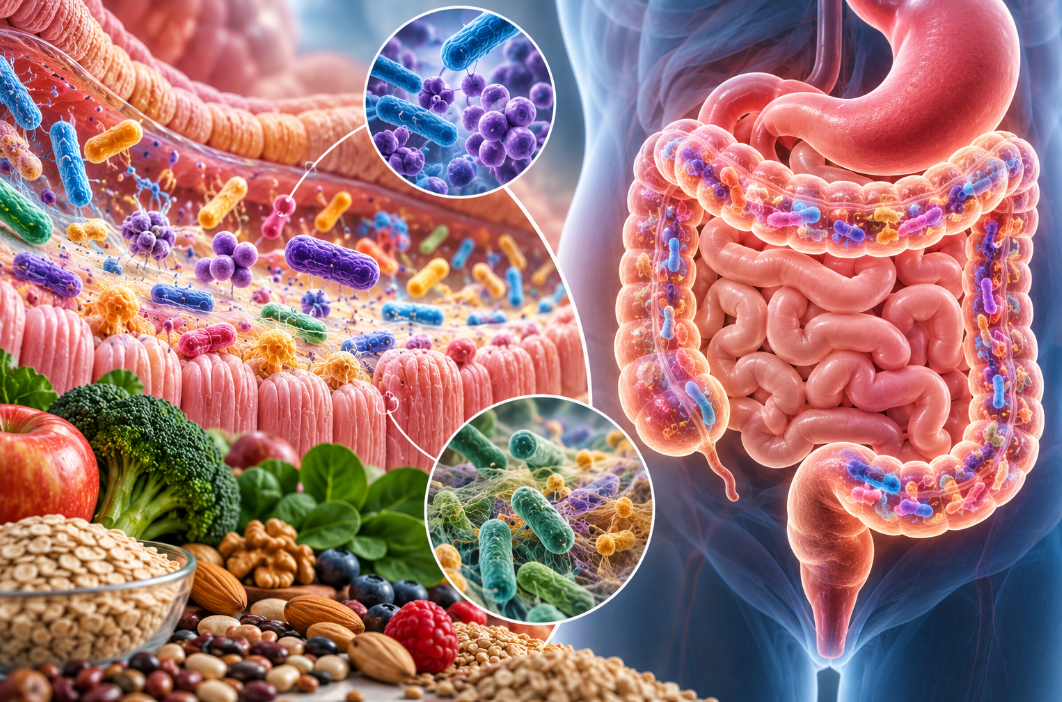
The human gut is home to trillions of microorganisms that form a complex ecosystem and interact with our bodies.
In recent years, the gut microbiome has attracted considerable scientific interest, as research suggests it plays a role in several important bodily functions, from digestion to immune regulation.
What Is the Gut Microbiome?
The gut microbiome includes the microorganisms living in the human gut, their genetic material, and, more broadly, the microbial ecosystem in which they interact.
It consists mainly of bacteria, but also includes archaea, viruses, fungi, and other microorganisms.
These microorganisms are not necessarily harmful. In fact, many contribute to normal physiological processes in the human body.
Gut microbiome composition varies considerably between individuals and can change throughout life.
Therefore, there is no single gut microbiome composition that can be considered ideal for everyone. [1,2]
What Does the Gut Microbiome Do?
The gut microbiome has a wide range of complex functions. Three particularly important areas are digestion, immune system function, and metabolism.
1. It Helps Digest and Metabolise Food
Certain gut microorganisms can break down dietary components, including specific types of dietary fibre, that cannot be digested by human enzymes.
This process produces compounds known as short-chain fatty acids (SCFAs), including acetate, propionate and butyrate.
Butyrate is an important energy source for cells lining the colon, while these microbial metabolites are involved in various metabolic and cellular processes. [2,3]
2. It Interacts with the Immune System
The gut microbiome plays a role in the development and regulation of the immune system.
Gut microorganisms and the substances they produce can influence immune cell function and help maintain the intestinal barrier.
The microbial community can also help protect against pathogens by competing with them for space and resources in the gut. [1]
3. It Is Linked to Metabolic Health
Studies have identified differences in gut microbiome composition and function between healthy individuals and people with conditions such as obesity and type 2 diabetes.
However, an association does not necessarily mean that changes in the gut microbiome cause a disease.
In many cases, it remains unclear whether the observed changes are a cause, a consequence, or a combination of both. [2]
How Can We Influence Our Gut Microbiome?
Diet is one of the most important modifiable factors influencing the gut microbiome.
Fibre-rich foods, such as legumes, vegetables, fruits and whole grains, provide nutrients that various gut microorganisms can use.
Fermented foods are also being studied for their potential effects on gut microbiome composition and function.
In a small randomised clinical trial published in Cell in 2021, a diet rich in fermented foods increased microbial diversity and reduced certain markers of inflammation.
By contrast, a high-fibre diet influenced the functional capacity of the gut microbiome without significantly increasing overall microbial diversity during the study.
These findings are interesting, but the small sample of 36 participants limits how widely the results can be generalised. [3,4]
Are Gut Microbiome Tests Reliable?
In recent years, commercial tests have become available that claim to assess gut microbiome health by analysing a stool sample.
These tests typically use genetic sequencing techniques to identify which microorganisms are present and estimate their relative abundance.
However, being able to detect microorganisms does not necessarily mean that the results can be used to diagnose a medical condition.
What Does the Scientific Evidence Show?
In 2025, an international expert consensus statement on the clinical use of microbiome testing was published in The Lancet Gastroenterology & Hepatology.
The experts concluded that the available scientific evidence does not support the widespread use of these tests in routine clinical practice.
Furthermore, there are no sufficiently established reference ranges for the abundance of most microorganisms, nor is there a universally accepted measure that can be used to diagnose what is commonly referred to as “dysbiosis”. [5]
In 2026, a study published in Communications Biology evaluated seven commercial gut microbiome testing services using standardised stool material.
The researchers found substantial differences in the results between providers, largely attributed to methodological differences and insufficient standardisation.
These findings highlight significant limitations in the analytical reliability of these services. [6]
Commercial gut microbiome tests should therefore not be considered reliable tools for diagnosing diseases in general or used as the basis for personalised treatments without sufficient clinical evidence.
This does not mean that stool tests are generally unreliable. Targeted tests designed to detect specific intestinal pathogens are a separate category of diagnostic testing.