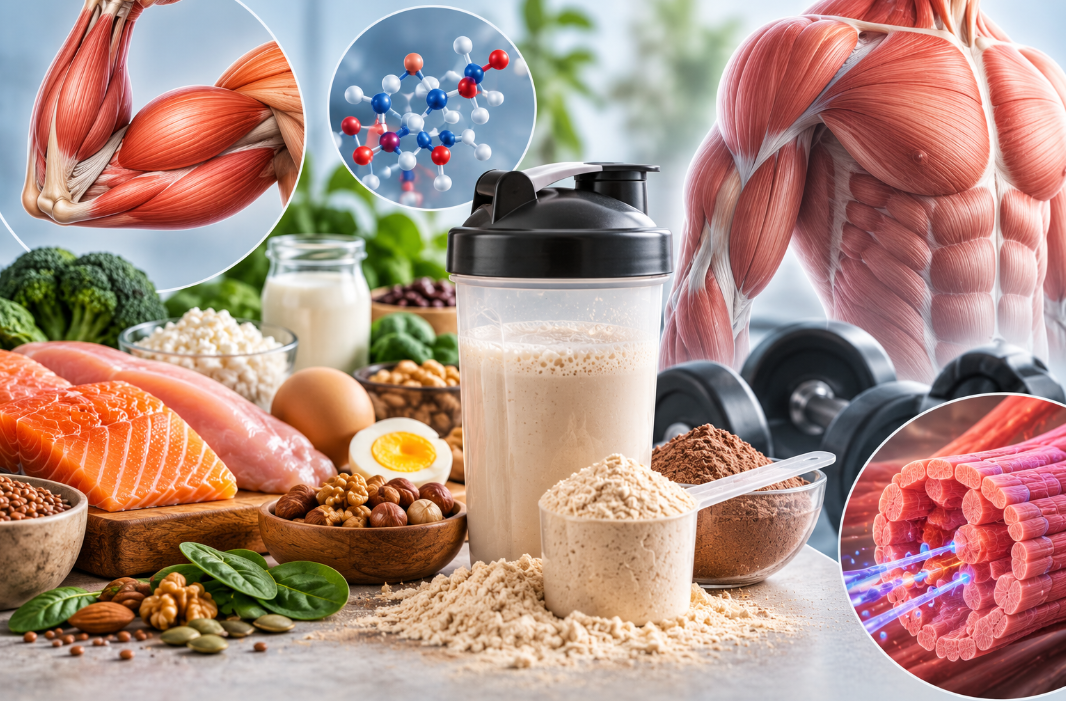
What Are Protein Supplements?
Protein supplements are products containing concentrated or isolated proteins, designed to help people meet their daily protein requirements.
They are most commonly available as powders, but also come in the form of ready-to-drink shakes and protein bars.
The protein they contain is usually derived from animal or plant sources, such as milk, eggs, soy, peas, and rice.
Although protein supplements are commonly associated with sports nutrition, they are not intended exclusively for athletes. They can be a convenient way to meet increased protein requirements or supplement someone’s diet when their protein intake from food is insufficient. [1]
How Are Protein Supplements Made?
The manufacturing process depends on the original protein source.
Whey Protein
Whey protein is derived from milk and is often produced using the liquid whey separated during cheese production.
Whey contains proteins, lactose, water, and minerals.
Processing techniques such as ultrafiltration and diafiltration are used to increase the protein concentration while removing some of the lactose and other components.
The liquid is then concentrated and dried, usually through a process known as spray drying, to produce the final protein powder. [2]
Depending on the degree of processing, different forms of whey protein can be produced:
- Whey Protein Concentrate (WPC): A concentrated form of whey protein that retains higher amounts of lactose and fat.
- Whey Protein Isolate (WPI): A more refined form with a higher protein content and typically much lower levels of lactose and fat.
- Whey Protein Hydrolysate (WPH): Whey protein that has undergone additional enzymatic hydrolysis, a process that breaks proteins down into smaller peptides.
Plant-Based Proteins
Plant-based protein supplements are made from ingredients such as soy, peas, and other plant sources.
The manufacturing process may involve milling, separating different components, and extracting the protein.
Various techniques can be used during production.
These methods increase the protein content of the final product while reducing the proportion of other components from the original plant material, such as starch. [3]
How Do Protein Supplements Differ from Whole Food Sources?
The main difference between protein supplements and conventional protein-rich foods lies in their overall nutritional composition.
Foods such as eggs, fish, yoghurt and legumes provide protein alongside other nutrients, including vitamins, minerals, fats and, in the case of certain plant foods, dietary fibre.
Protein supplements, on the other hand, are primarily designed to provide a relatively large amount of protein in a small serving.
This makes them convenient, but it does not mean they are nutritionally equivalent to a complete meal.
The influence of the food matrix, which refers to the natural structure of a food and the interactions between its components, is also an area of ongoing scientific research.
A randomised clinical trial published in the American Journal of Clinical Nutrition in 2026 investigated muscle protein synthesis following the consumption of different protein-rich foods.
The researchers found that foods such as eggs, salmon, pork and lentils produced comparable increases in muscle protein synthesis after exercise in young adults, despite differences in their amino acid profiles and overall nutritional composition.
However, the study examined the short-term response following a single exercise session rather than long-term increases in muscle mass. [4]
Ultimately, the usefulness of protein supplements depends largely on a person’s total protein intake, the quality and quantity of essential amino acids they consume, and their individual nutritional needs. [1,5]