What Is Retatrutide?
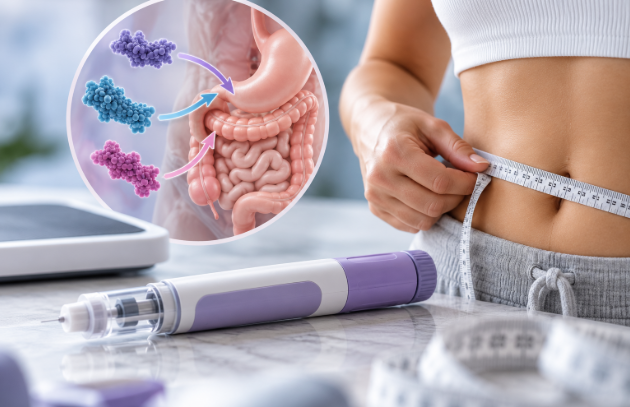
Retatrutide is an investigational drug that acts on three different hormone receptors: GLP-1, GIP, and glucagon receptors.
These hormones play important roles in regulating appetite, metabolism, and blood glucose levels, among other functions.
Unlike medications that target one or two receptors, retatrutide has a triple mechanism of action and is being investigated as a potential treatment for obesity and type 2 diabetes.
How Was the Study Conducted?
TRIUMPH-2 was a randomised, double-blind phase 3 clinical trial involving 1,152 adults from eight countries.
All participants had type 2 diabetes and a body mass index (BMI) of at least 27 kg/m².
They were randomly assigned to one of four groups, receiving a weekly subcutaneous injection of:
- Retatrutide 4 mg.
- Retatrutide 9 mg.
- Retatrutide 12 mg.
- Placebo.
Treatment lasted 80 weeks, during which participants also received lifestyle advice.
What Did the Study Find?
After 80 weeks, the average percentage change in body weight was:
| Group | Average Weight Loss |
|---|---|
| Retatrutide 4 mg | 11.9% |
| Retatrutide 9 mg | 16.8% |
| Retatrutide 12 mg | 18.8% |
| Placebo | 5.1% |
The differences between the retatrutide groups and the placebo group were statistically significant (p < 0.0001).
Improvements in blood glucose control were also observed, including reductions in glycated haemoglobin (HbA1c), an important marker used to monitor diabetes.
What Do We Know About the Side Effects?
The most commonly reported side effects were gastrointestinal, particularly diarrhoea, nausea and vomiting.
In the highest-dose group, approximately 34% of participants experienced diarrhoea, and 28% reported nausea.
Cases of hypotension (low blood pressure) and dysaesthesia, a disturbance of normal sensation, were also reported.
Permanent treatment discontinuation due to adverse events or death was more common in the 9 mg and 12 mg groups than in the placebo group. [1]
What Do These Findings Mean?
TRIUMPH-2 has several important strengths, including its large sample size, randomised design and relatively long follow-up period.
However, the trial did not directly compare retatrutide with other available obesity treatments, such as semaglutide or tirzepatide.
It also remains unclear how much of the weight loss can be maintained after treatment is discontinued and whether the observed benefits translate into fewer cardiovascular events.
The study was funded by Eli Lilly, the pharmaceutical company developing retatrutide.
Conclusion
Retatrutide produced substantial weight loss and improved glycaemic control in adults with overweight or obesity and type 2 diabetes.
These are promising findings from a phase 3 clinical trial. However, retatrutide remains an investigational drug and has not yet been approved for clinical use.